
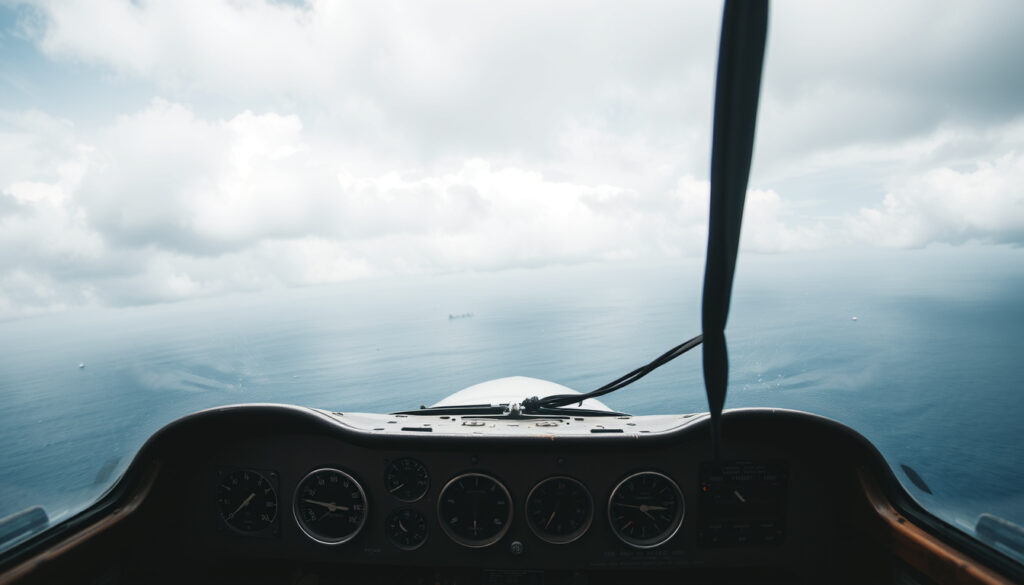
Few mysteries have held the public imagination as long as Amelia Earhart’s final flight. She was a woman who had already defied expectations, yet on July 2, 1937, while attempting to circle the globe, she vanished into the Pacific along with navigator Fred Noonan. What follows is a clear-eyed look at what we know, what we don’t, and which theories hold the most weight.
Born: July 24, 1897 ·
Disappeared: July 2, 1937 ·
Declared dead: January 5, 1939 ·
First woman to fly solo across Atlantic: 1932 ·
Age at disappearance: 39
Quick snapshot
- Earhart and Noonan departed Lae, New Guinea, on July 2, 1937, headed for Howland Island (Smithsonian National Air and Space Museum)
- No wreckage from the Lockheed Electra 10E was ever found (Britannica)
- Declared dead on January 5, 1939 (Wikipedia)
- The exact location of the crash or landing (Smithsonian National Air and Space Museum)
- Whether Earhart and Noonan survived after ditching (Biography)
- The authenticity of reported distress signals (Fox News)
- A 2025 disclosure campaign released additional Earhart records from the National Archives (Office of the Director of National Intelligence)
- U.S. Navy concluded after search: plane ran out of fuel (Wikipedia)
- Ongoing record disclosures from the National Archives (National Archives)
- Interest remains high in the Nikumaroro and Japanese-capture theories (Mental Floss)
The six key facts below, drawn from official and editorial sources, provide the foundation for everything else. Each value comes from a verifiable record.
| Label | Value |
|---|---|
| Full Name | Amelia Mary Earhart |
| Born | July 24, 1897 |
| Died | Declared dead January 5, 1939 |
| Spouse | George P. Putnam |
| Known for | First woman to fly solo across Atlantic |
| Aircraft | Lockheed Electra 10E |
What Most Likely Happened to Amelia Earhart?
On July 2, 1937, Earhart and navigator Fred Noonan lifted off from Lae, New Guinea, in a Lockheed 10E Electra (Britannica) headed for Howland Island, a tiny spit of land in the central Pacific. The leg was roughly 2,556 miles and should have taken about 18 hours. They never arrived. The U.S. Navy led a massive search and concluded they ditched at sea after running out of fuel (Wikipedia).
That explanation—crash and sink—remains the most widely supported by evidence, but it’s not the only one. Three major theories persist.
- Crash-and-sink theory – Earhart and Noonan ran out of fuel and made an ocean landing near Howland Island. Biography (editorial biography site) notes that waves would have broken up the Electra quickly, explaining why no wreckage has been found.
- Nikumaroro (Gardner Island) theory – The plane crash-landed on a reef near Gardner Island, now Nikumaroro, about 350 nautical miles south of Howland. Biography reports that artifacts found there have kept this theory alive for decades.
- Japanese-capture theory – Earhart and Noonan reached the Marshall Islands (then Japanese-controlled) and were captured as suspected spies. Mental Floss (popular history site) classifies this as plausible but disputed. A U.S. Naval Institute Proceedings article from 1971 called it possible but unlikely.
Every theory lacks a single piece of definitive proof—a wreck serial number, a clear photograph, or a verified distress message. The National Archives (U.S. government repository) holds records that are being released on a rolling basis, including a 2025 disclosure campaign from the Office of the Director of National Intelligence.
Did Amelia Earhart ever get found?
No. A federally declared death in 1939 did not close the case, but no physical remains or wreckage—confirmed by serial numbers—have been recovered. Smithsonian (National Air and Space Museum) frames the disappearance as unresolved.
When did Amelia Earhart disappear?
July 2, 1937, while en route from Lae to Howland Island. The Smithsonian confirms they were scheduled to land on Howland on July 2 local time.
The pattern here is clear: the official conclusion aligns with the absence of wreckage, yet the lack of physical evidence keeps alternate theories alive.
What Were Amelia’s Last Words?
Earhart’s radio transmissions during the final flight were logged by the U.S. Coast Guard cutter Itasca, stationed near Howland Island. The most frequently reported last transmission came at 8:43 a.m. local time on July 2, 1937.
The alleged message: “We are on the line 157 337. We will repeat this message on 6210 kilocycles. Wait.” However, no single definitive last transmission has been verified. According to Smithsonian (National Air and Space Museum), multiple distress signals were logged in early July, but their origins remain ambiguous. Some may have been hoaxes or garbled reflections of other signals.
Without a verified final transmission, researchers cannot pinpoint the aircraft’s last known position with enough precision to narrow the search area. The Smithsonian and Fox News both note that the Coast Guard’s search area was northwest of Howland—but that was a guess based on the flight plan, not confirmed radio bearings.
The implication is that ambiguous radio logs have prevented any targeted recovery effort from succeeding.
Did Amelia Earhart Have a Baby? And Who Was Her Lover?
Who was Amelia Earhart’s lover?
Earhart married publisher George P. Putnam in 1931 (Britannica), who also served as her publicist and managed her career. Rumors have persisted about a relationship with Gene Vidal, a pilot and government official (father of writer Gore Vidal). No concrete evidence supports the rumor, but it continues to appear in biographies and editorial pieces.
Who was Amelia Earhart married to?
George P. Putnam. Their marriage was unconventional for the era—Earhart reportedly drafted a prenuptial agreement and retained her own name.
Confirmed: Earhart had no children. The question “Did Amelia Earhart have a baby?” is answered definitively: she did not. This claim is established by Britannica.
What this means: despite persistent gossip, the historical record on her personal life is clear and well-documented.
Did Amelia Earhart Land in Ireland? Key Flights and Records
What was Amelia Earhart’s plane called?
On her record-setting flights, Earhart flew two distinct planes. For the 1932 solo Atlantic crossing, she piloted a Lockheed Vega 5B. For the 1937 world flight, she flew a Lockheed 10E Electra. Both are documented by Britannica (encyclopedic reference).
What records did she set?
- First woman to fly solo across the Atlantic (1932) – she landed in a field near Londonderry, Northern Ireland, after 14 hours and 56 minutes.
- First person to fly solo from Hawaii to California (1935) – a route considered extremely dangerous.
- First woman to cross the Atlantic by air (1928) – as a passenger, but still a milestone.
- Multiple altitude and speed records throughout the 1930s.
These records are verified by Smithsonian (National Air and Space Museum) and Britannica.
Yes, Earhart did land in Ireland—near Londonderry—after her 1932 solo Atlantic flight. That landing made her an international celebrity.
The catch: while her accomplishments were pioneering, they are often overshadowed by the mystery of her disappearance.
How Old Would Amelia Earhart Be Today? Her Birth and Enduring Fame
Where was Amelia Earhart born?
Atchison, Kansas, on July 24, 1897. If alive today, she would be over 126 years old. Her birthplace is confirmed by Britannica and the Smithsonian.
What was her childhood like?
Earhart grew up in a middle-class family in Kansas and Iowa. According to Britannica, she became interested in flying after a stunt plane ride at a fair in 1920. She worked as a nurse’s aide and later saved up for flying lessons.
Earhart’s fame today rests entirely on her disappearance, not her record-setting flights. Her 1932 solo Atlantic flight was a genuine first, yet she is better remembered for vanishing than for landing in Ireland.
The pattern: a pioneering aviator whose legacy is now permanently tied to an unsolved puzzle.
Key Quotes from Earhart and Those Who Knew Her
“Please know I am quite aware of the hazards.”
— Amelia Earhart, in a letter to her husband George Putnam before her final flight
“She had an indomitable spirit and a relentless drive to push the boundaries of aviation.”
— George P. Putnam, in his biography of Earhart
“Adventure is worthwhile in itself.”
— Amelia Earhart, from her book The Fun of It (1932)
Summary
Earhart’s disappearance on July 2, 1937, remains unsolved because no piece of wreckage or verified message has ever conclusively tied any theory to the aircraft’s final position. The U.S. Navy’s crash-and-sink explanation is the most consistent with available evidence, but the lack of a found Electra means the case stays open. For anyone interested in aviation history or cold-case mysteries, the lesson is clear: the search continues through newly declassified records, but the Pacific has kept its secret for over 87 years.
Frequently asked questions
Was Amelia Earhart married?
Yes, to George P. Putnam, a publisher, from 1931 until her death in 1937.
Did Amelia Earhart have children?
No. The question “Did Amelia Earhart have a baby?” is answered definitively: she did not.
What plane did she fly on her last flight?
A Lockheed 10E Electra, twin-engine monoplane.
What is the Nikumaroro theory?
It posits that Earhart and Noonan crash-landed on or near Gardner Island (now Nikumaroro) in the Phoenix Islands, about 350 nautical miles south of Howland.
What is the Japanese capture theory?
It suggests Earhart and Noonan reached the Marshall Islands, were captured by Japanese forces, and were later killed as suspected spies. Mental Floss calls this possible but unsubstantiated.
Who was Fred Noonan?
Earhart’s navigator on the 1937 world flight. An experienced mariner and pilot, he was tasked with celestial navigation.
Where was Amelia Earhart headed when she disappeared?
Howland Island, a tiny island in the central Pacific Ocean, about 2,556 miles from Lae, New Guinea.
How did Amelia Earhart die?
The official conclusion is that she died after her aircraft crashed at sea near Howland Island. No remains have been found, and the exact cause of death has not been established.
Related stories





Daniel Campbell is Editor-in-Chief at True North Brief, overseeing editorial standards, publication decisions and corrections.