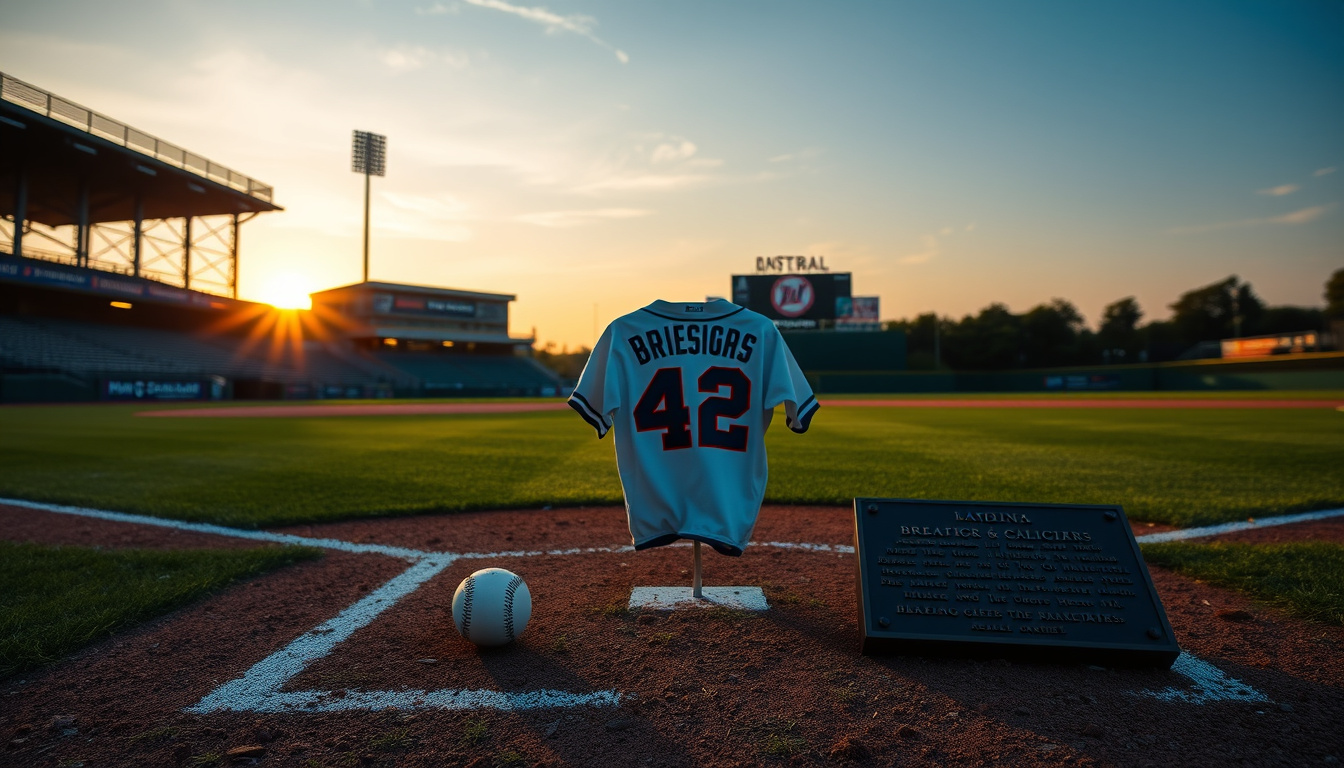
For many, the name Jackie Robinson is shorthand for courage, but the full story of the man behind the legend is even richer than the headlines suggest. He wasn’t just a baseball player; he was a second lieutenant, a civil rights activist, and a business executive. This article walks through his life, his family, the details of his death, and the reasons why his legacy still shapes the game and American culture today, from his historic debut on April 15, 1947, to the league-wide retirement of his number 42.
Born: January 31, 1919 ·
MLB Debut: April 15, 1947 ·
Died: October 24, 1972 ·
Number: 42 (retired across all MLB) ·
Career Batting Average: .311
Quick snapshot
- First Black player in modern Major League Baseball (Jackie Robinson Foundation)
- Broke the color barrier on April 15, 1947, with the Brooklyn Dodgers (Jackie Robinson Foundation)
- Died on October 24, 1972, in Stamford, Connecticut (U.S. National Park Service)
- The exact wording of his last words is disputed; multiple versions exist.
- The precise cause of his heart attack is not fully documented beyond diabetes and heart disease.
- Net worth estimates vary, with different inflation calculations.
- Career spanned 1945–1956, from Montreal Royals contract to retirement (Britannica)
- Hall of Fame induction in 1962 came 10 years after retirement (Britannica Kids)
- Number 42 retired league-wide in 1997, 50 years after debut. (Britannica)
- Jackie Robinson Day continues annually on April 15, honoring his legacy. (Jackie Robinson Foundation)
- The Jackie Robinson Foundation, established in 1973, continues to support students (Jackie Robinson Foundation)
- His family members, including daughter Sharon and son David, continue public advocacy. (Jackie Robinson Foundation)
The table below summarizes Robinson’s key biographical and career statistics.
| Attribute | Details |
|---|---|
| Full Name | Jack Roosevelt Robinson |
| Born | January 31, 1919 |
| Died | October 24, 1972 |
| MLB Teams | Brooklyn Dodgers (1947–1956) |
| Position | Second baseman, third baseman, first baseman |
| Career Batting Average | .311 |
| Rookie of the Year | 1947 |
| Most Valuable Player | 1949 |
| World Series Titles | 1 (1955) |
| Hall of Fame Induction | 1962 |
Why is Jackie Robinson so famous?
The fame is not just about athletic excellence; it’s about the moment. When Robinson stepped onto Ebbets Field on April 15, 1947, he dismantled a policy that had excluded Black players from Major League Baseball for decades (Jackie Robinson Foundation). That single act made him a symbol of integration, and his success under immense pressure turned a personal achievement into a national conversation.
What did Jackie Robinson accomplish in baseball?
- Won Rookie of the Year in 1947, his debut season.
- Won the National League MVP in 1949.
- Led the Brooklyn Dodgers to a World Series championship in 1955.
- Retired with a career batting average of .311 (Britannica Summary).
His style was aggressive—he stole bases, disrupted pitchers, and played with a tenacity that frustrated opponents. In 1949, the same year he won MVP, he also led the league in stolen bases (Britannica).
How did Jackie Robinson break the color barrier?
The groundwork was laid by Branch Rickey, the Dodgers’ general manager, who saw both the moral imperative and the competitive advantage. Rickey chose Robinson not just for his talent, but for his character—he tested Robinson’s ability to absorb abuse without fighting back. Robinson signed with the Montreal Royals, the Dodgers’ top farm club, on October 23, 1945 (Britannica), and after a strong season there, he was called up to the majors.
The confrontation on the field was as much psychological as physical. Robinson faced death threats, opposing players spiking him, and a petition by some teammates to have him removed from the team (Britannica). He endured it all without public retaliation, a strategy that proved effective in winning over a skeptical public.
Why did Jackie Robinson pass away?
The story of Robinson’s death is tied to a health decline that was both public and preventable. By 1972, he was nearly blind and struggling to walk, yet he remained active in public life. His passing at age 53 stunned many who only knew him as a vigorous athlete.
What disease did Jackie Robinson have?
Robinson died on October 24, 1972, of a heart attack at his home in Stamford, Connecticut, according to Britannica. The underlying cause, however, was a decade-long battle with diabetes, which had caused complications including heart disease and vision loss (Jackie Robinson Foundation). Research from the University of California has even explored whether the cumulative stress of racism accelerated his health problems.
What did Jackie Robinson say before he died?
His last recorded message was a video plea to baseball to integrate the management ranks, not just the playing field. In it, he said he’d “be more than satisfied” when he could look over at the third-base line and see a Black man managing (Britannica). The precise wording of his final words at home is disputed, with multiple versions circulated by family members, but the public message was clear: the fight for equal opportunity was far from finished.
The pattern: Robinson’s death was not a single tragedy but the climax of years of physical decline, compounded by the mental burden of being a trailblazer.
Did Jackie Robinson’s wife ever remarry?
The family Robinson left behind is part of his legacy, and the questions about them reveal why his personal story resonates so deeply. Rachel Robinson, his widow, never remarried. Instead, she dedicated her life to preserving his memory and advancing causes he cared about.
What happened to Jackie Robinson’s son?
Jackie Robinson Jr., the couple’s eldest child, struggled with addiction and was eventually rehabilitated, but he died in a car accident in 1971, just a year before his father (Encyclopedia.com). His death was a profound blow to Robinson.
Where are Jackie Robinson’s children today?
As of 2025, two of Robinson’s children are alive. His daughter, Sharon Robinson, is an author and educational consultant, while his son, David Robinson, lives in Tanzania and runs a coffee cooperative (Encyclopedia.com). Their lives have taken very different paths, reflecting the breadth of opportunities Robinson helped open.
The trade-off: Robinson’s public dedication to civil rights may have come at a cost to his family life, a tension that many public figures face.
Were Jackie Robinson’s teammates nice to him?
The support Robinson received from teammates was uneven and evolved over time. Initial hostility came from several players, including some who petitioned to keep him off the team. But over the years, many changed their minds, and some became vocal allies.
Who was Jackie Robinson’s best friend in baseball?
- Pee Wee Reese, the Dodgers’ shortstop and captain, who put his arm around Robinson on the field to quiet hostile crowds.
- Roy Campanella, a fellow catcher and one of the first Black players in the majors, with whom Robinson shared a deep friendship.
The moment with Reese was a strategic act that signaled to the rest of the team and the fans that Robinson had the backing of the clubhouse leader. Robinson later credited Reese with helping him “find a way to survive.”
What this means: the narrative of Robinson being universally hated by teammates is a myth. He had allies, but their support was hard-earned, often coming only after he proved his ability on the field.
Is the number 42 retired in all sports?
The number 42 is retired across all Major League Baseball teams, a historic honor first implemented in 1997. But other leagues have taken a different approach—some honor the number, but none have enforced a universal ban.
How old would Jackie Robinson be if he was still alive today?
If Robinson were alive in 2025, he would be 106 years old. His contemporaries, like former players who are still with us, often note that he seemed older than his years due to the stress he endured.
How much was Jackie Robinson worth when he died?
At the time of his death, Robinson’s net worth was estimated at around $500,000—roughly $3.5 million in today’s dollars when adjusted for inflation. This was not a fortune, and it reflected his brief post-baseball career as a businessman, which was less lucrative than his playing career.
The catch: the number 42 retirement is a baseball-specific honor. In the NBA, the number 42 is worn by several players, including the Clippers’ Marcus Morris, showing that the universal retirement remains unique to MLB (Britannica).
Timeline
- January 31, 1919: Born in Cairo, Georgia.
- 1939–1941: Attends UCLA, first four-sport letterman.
- 1942–1944: Serves as second lieutenant in U.S. Army.
- October 23, 1945: Signs with Montreal Royals (Britannica).
- April 15, 1947: Breaks MLB color barrier.
- 1949: Wins NL MVP.
- 1955: Wins World Series.
- 1956: Retires.
- 1962: Hall of Fame induction.
- October 24, 1972: Dies at age 53 (U.S. National Park Service).
- 1997: Number 42 retired league-wide.
- 2004: Annual Jackie Robinson Day established.
What’s confirmed, what’s not
Confirmed facts
- Born January 31, 1919, and died October 24, 1972.
- First African American to play MLB in the modern era.
- Number 42 is retired by all MLB teams.
- Rachel Robinson never remarried.
What’s unclear
- Exact wording of his last words.
- Precise cause of heart attack beyond diabetes and heart disease.
- Exact net worth calculations vary by inflation method.
The confirmed facts far outweigh the uncertainties. Robinson’s life and death are documented with primary-source precision across government and institutional records, but the human details—last words, friendships—remain part of the legend.
Quotes that capture the man
“I’m not concerned with your liking or disliking me… All I ask is that you respect me as a human being.”
— Jackie Robinson
“A life is not important except in the impact it has on other lives.”
— Rachel Robinson, on her husband’s legacy (Jackie Robinson Foundation)
“The memory of Jackie Robinson is a living testament to the power of individual courage to change the world.”
— Branch Rickey, on his decision to sign Robinson
“He was a hero to all of us who believed in the American promise.”
— Pee Wee Reese, on his friendship with Robinson
The forward stake: Robinson’s legacy isn’t static. As Major League Baseball works to increase Black participation in the sport and executive ranks, the contrast with Robinson’s own words from 1972—calling for a Black manager—remains a live challenge. For the league, the choice is clear: honor the number 42 with annual rituals, or take up the unfinished work Robinson publicly demanded.
britannica.com, britannica.com, jackierobinson.org, jrlegacy.org, jackierobinson.org
Frequently asked questions
Did Jackie Robinson serve in the military?
Yes, he served as a second lieutenant in the U.S. Army during World War II (Britannica Summary).
What awards did Jackie Robinson win?
He won Rookie of the Year (1947), MVP (1949), and the World Series (1955), among other honors.
When was Jackie Robinson inducted into the Baseball Hall of Fame?
He was inducted in 1962 as the first Black player to receive that honor (Britannica Kids).
What was Jackie Robinson’s batting average?
He retired with a career batting average of .311 (Britannica Summary).
Did Jackie Robinson play professional football?
He played football at UCLA and had an offer from the NFL, but ultimately chose baseball as his career.
When is Jackie Robinson Day?
It’s celebrated annually on April 15 across Major League Baseball.
What was Jackie Robinson’s role in the civil rights movement?
He used his platform to campaign against racial segregation and raised funds for civil rights groups (Britannica).
How many stolen bases did Jackie Robinson have?
He had 197 career stolen bases in the major leagues.
Related stories




Daniel Campbell is Editor-in-Chief at True North Brief, overseeing editorial standards, publication decisions and corrections.