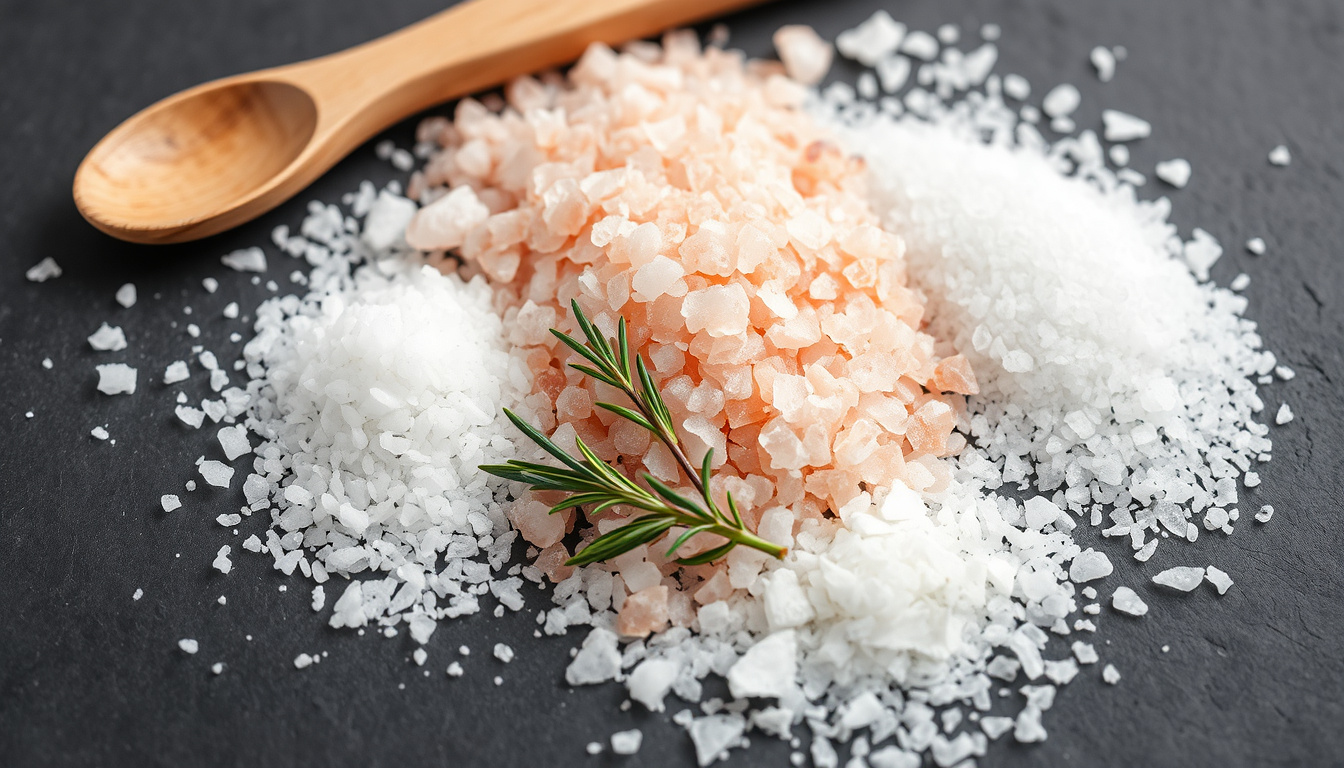

Few kitchen staples spark as much debate as salt. This guide cuts through the marketing to compare Celtic, Himalayan, and table salts—and puts Irish artisanal producers like Achill Island and Dingle under the lens, noting that sea salt generally contains the same amount of sodium as other salts by weight but crystal size changes what fits in a teaspoon.
Fine sea salt sodium per teaspoon: 2,120 mg Administration for Community Living · Coarse sea salt sodium per teaspoon: 1,560 mg Harvard T.H. Chan School of Public Health · Key minerals in Celtic salt: Magnesium, potassium, calcium, iron Harvard T.H. Chan School of Public Health (trace mineral content)
Quick snapshot
- Sea salt is produced by evaporating seawater Harvard T.H. Chan School of Public Health
- Sea salt retains trace minerals from ocean water Harvard T.H. Chan School of Public Health
- High sodium intake poses health risks U.S. Food and Drug Administration
- Superiority of one brand over another is subjective Carolyn Williams, PhD, RD
- Alkaline-forming health claims are unproven SEE SALT
- Hawaiian-style sea salt colored with volcanic clay is a novelty, not a nutritional advantage Wikipedia
- Larger salt flakes may reduce sodium per pinch, but not per gram SEE SALT
- Demand for region-specific, trace-mineral-rich sea salts is expected to grow Salmarim
Four quick reference points that summarize what matters about sea salt.
| Attribute | Value |
|---|---|
| Type of salt | Sea salt |
| Main production method | Evaporation of seawater (solar or boiling) Harvard T.H. Chan School of Public Health |
| Key mineral difference | Retains trace minerals from ocean water Harvard T.H. Chan School of Public Health |
| Sodium content per 1 tsp | Approx. 2,200 mg (varies by crystal size) Administration for Community Living |
What are sea salts good for?
The trace mineral content in sea salt is real but nutritionally insignificant for most people unless they consume very large amounts. The real value is flavor and texture.
Culinary uses
- Adds flavor without industrial processing SaltWorks
- Coarse sea salts provide a crunchy texture as finishing salt Think Tasty
- Fine sea salt dissolves quickly for baking and seasoning Carolyn Williams, PhD, RD
Skin and hair treatments
- Sea salt is often used in exfoliants and scalp scrubs, though evidence is anecdotal SaltWorks
Bath salts and relaxation
- Magnesium in sea salt may promote muscle relaxation when dissolved in bathwater Salmarim
Food preservation
- Sea salt draws moisture out of foods, inhibiting bacterial growth—a method used for centuries Wikipedia
The implication: sea salt’s real value lies in culinary uses, not as a health supplement.
Which sea salt is the healthiest?
Choosing a fancy sea salt won’t lower your sodium intake if you use the same volume. The healthier choice is using less salt overall.
Three contenders, one pattern: the mineral and processing differences are real, but the sodium content is nearly identical per gram.
| Feature | Celtic Sea Salt | Himalayan Pink Salt | Table Salt |
|---|---|---|---|
| Origin | Coastal France (Brittany) Salmarim | Khewra Salt Mine, Pakistan Wikipedia | Mined or evaporated, processed McGill Office for Science and Society |
| Sodium per tsp (approx) | 1,560 mg (coarse) Harvard T.H. Chan School of Public Health | ~1,560 mg (coarse, similar) Harvard T.H. Chan School of Public Health | ~2,300 mg U.S. Food and Drug Administration |
| Processing | Hand-harvested, sun-dried Salmarim | Mined, minimal processing | Washed, anti-caking agents, often iodized Carolyn Williams, PhD, RD |
| Iodine content | Very low, not iodized Carolyn Williams, PhD, RD | Very low | Often iodized |
The implication: if you choose Celtic or Himalayan for trace minerals, you aren’t getting a sodium-free pass. The WHO recommends less than 5g of salt per day U.S. Food and Drug Administration, and any salt type can push you over that limit if used liberally.
What are Celtic sea salts?
Origin and harvesting method
Celtic sea salt, also called sel gris, comes from the Brittany coast in France. Harvesters use 900-year-old techniques to rake salt from clay-lined salt ponds Salmarim. Its grey color comes from the clay minerals that cling to the crystals.
Nutritional profile
It retains magnesium, potassium, calcium, and iron from seawater. According to Carolyn Williams, PhD, RD, these minerals are present in trace amounts and do not provide a significant dietary contribution unless very large quantities are consumed.
Side effects and who should avoid
WebMD’s editorial team notes that Celtic salt may benefit hydration in small amounts but advises moderation—especially for people with high blood pressure or kidney disease WebMD (note: WebMD article on Celtic Salt: Benefits and Side Effects). The high sodium content poses the same risks as any other salt.
Availability
Celtic sea salt is widely available in health food stores and online. In the UK and Ireland, it can be found in supermarkets like Tesco under brands such as “Celtic Sea Salt” Carolyn Williams, PhD, RD.
The pattern: Celtic salt is a traditional artisan product with a unique mineral profile, but its health advantages are subtle at best.
What’s the difference between sea salt and Celtic Sea Salt?
Celtic sea salt is a specific type of sea salt harvested from the Brittany coast using traditional methods, giving it a distinct grey color and higher moisture content. Regular sea salt is a broader category that can come from any ocean, with varying harvest techniques. The main differences lie in processing, color, texture, and regional origin. Salmarim notes that Celtic salt is hand-raked and sun-dried, while many commercial sea salts are industrially evaporated.
What happens if I drink sea salt water every day?
Drinking pure seawater is dangerous. The salt concentration is far higher than what the human kidney can process, leading to cellular dehydration and organ stress.
The NOAA warning
The National Oceanic and Atmospheric Administration warns that drinking seawater can be deadly because the salt concentration overwhelms the kidneys NOAA (National Oceanic and Atmospheric Administration). A person would need to urinate more water than they drank to excrete the salt, leading to net dehydration.
Diluted salt water for hydration
Some wellness advocates recommend drinking diluted sea salt water (e.g., 1/4 tsp per liter) for electrolyte balance. WebMD notes that while trace minerals may offer minor hydration benefits, the practice is unnecessary for most people and can be risky for those with hypertension.
Medical consensus
The FDA and major health organizations consistently advise limiting sodium intake. Drinking even dilute salt water every day adds unnecessary sodium to a typical Western diet U.S. Food and Drug Administration.
What are the best sea salts?
Achill Island Sea Salt
Hand-harvested from Keel Bay on Ireland’s west coast, Achill Island Sea Salt is sun-dried and minimally processed. It has won multiple Great Taste Awards Salmarim (regional sea salt production).
Dingle Sea Salt
Produced on the Dingle Peninsula, this salt is evaporated by sun and wind, preserving a high mineral content. It contains no additives Salmarim.
West of Dingle Sea Salt
A sibling brand that uses the same traditional methods, also from the west coast of Ireland. It is marketed as a finishing salt.
Celtic Sea Salt (brine-based)
The original French sel gris remains a benchmark for artisanal sea salt. Available in coarse and fine grinds, it works well in cooking and as a table salt SaltWorks.
The pattern: the best sea salt for you depends on how you cook. Large flakes (Maldon, fleur de sel) excel as finishing salts Think Tasty, while fine sea salt is better for baking. Irish artisanal salts offer local terroir and texture, but all deliver similar sodium.
Confirmed facts vs. what’s unclear
Confirmed facts
- Sea salt is derived from seawater evaporation Harvard T.H. Chan School of Public Health
- Sea salt contains trace minerals Harvard T.H. Chan School of Public Health
- High sodium intake poses health risks U.S. Food and Drug Administration
What’s unclear
- Superiority of one brand over another is subjective Carolyn Williams, PhD, RD
- Alkaline-forming health claims are unproven SEE SALT
- Hawaiian-style sea salt colored with volcanic clay is a novelty, not a nutritional advantage Wikipedia
- Larger salt flakes may reduce sodium per pinch, but not per gram SEE SALT
Expert perspectives
“Celtic salt may offer minor hydration benefits due to its mineral content, but moderation is key—especially for those with high blood pressure.”
— WebMD editorial team
“Drinking seawater can be deadly to humans. The salt concentration is too high for our kidneys to process.”
— National Oceanic and Atmospheric Administration (NOAA)
For anyone shopping for sea salt, the choice between a mass-produced table salt and an artisanal Irish sea salt comes down to texture, trace minerals, and tradition—not a meaningful difference in sodium. The healthiest option is the one that helps you use less, not more. Irish consumers should view local artisanal brands as a genuine connection to the coast, but the real win is cutting back on salt overall.
Frequently asked questions
Can sea salt expire?
Sea salt does not expire in the sense of spoiling, but it can pick up moisture and clump. Stored in a dry, airtight container, it lasts indefinitely.
How is sea salt different from rock salt?
Sea salt comes from evaporated seawater; rock salt is mined from underground salt deposits. Both are primarily sodium chloride, but rock salt may have different trace minerals depending on the deposit.
Is sea salt gluten-free?
Yes, pure sea salt is naturally gluten-free. However, flavored or blended sea salts may contain gluten-containing additives—check the label.
What is the iodine content in sea salt?
Sea salt is not typically iodized. If you rely on salt for iodine, choose an iodized table salt.
Can I use sea salt for baking?
Yes, fine sea salt works well in baking because it dissolves quickly. Coarse sea salt may not distribute evenly.
Does sea salt have less sodium than kosher salt?
By weight, no. But because kosher salt flakes are larger, a teaspoon of kosher salt contains less sodium by volume than a teaspoon of fine sea salt.
Related stories





Daniel Campbell is Editor-in-Chief at True North Brief, overseeing editorial standards, publication decisions and corrections.