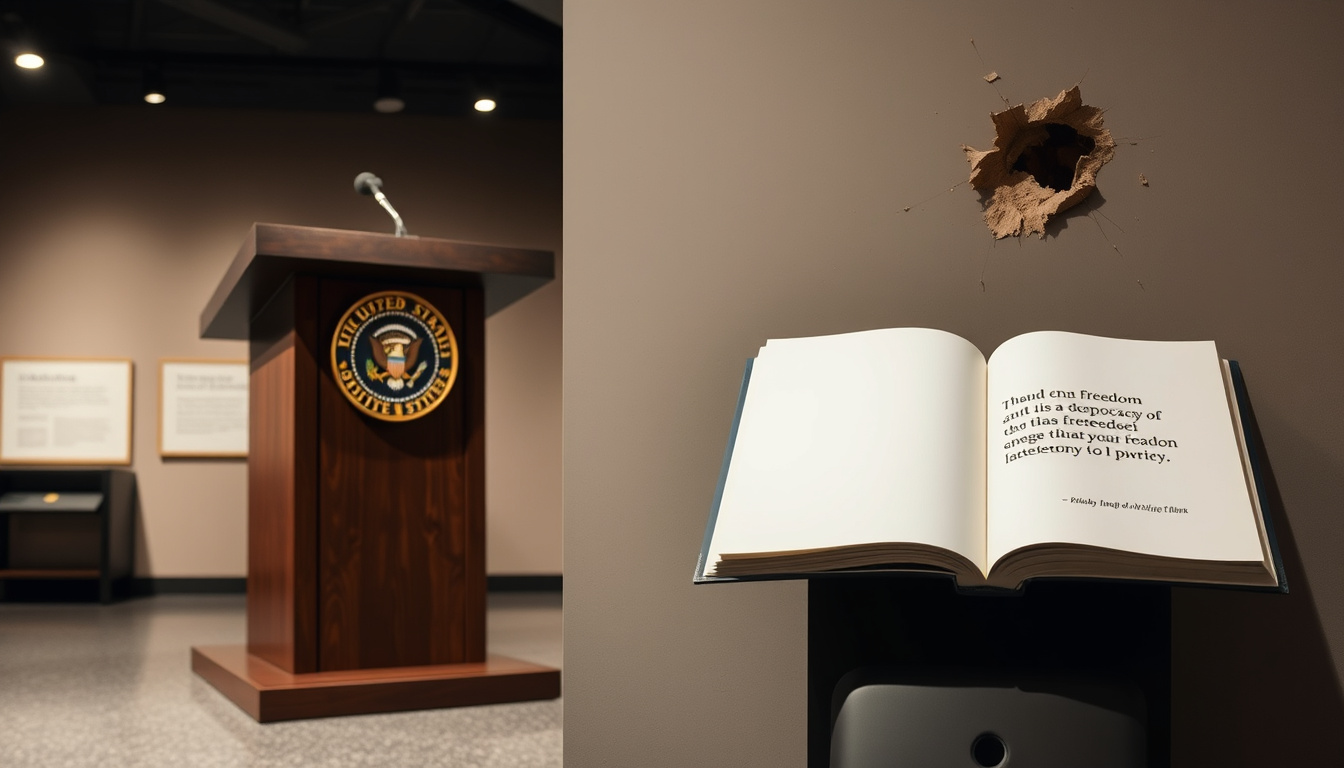
Few presidents leave a mark that people still argue about at dinner parties, but Ronald Reagan is one of them. He took the oath as the 40th president on January 20, 1981 (U.S. Department of State, Office of the Historian), and 69 days later John Hinckley Jr. shot him outside the Washington Hilton, according to Biography.com.
Born: February 6, 1911, Tampico, Illinois · Died: June 5, 2004, Los Angeles, California · Presidency: 40th President of the United States, 1981–1989 · Political Party: Republican · Famous Quote: “Tear down this wall!”
Quick snapshot
- Reagan survived the assassination attempt and completed two terms (U.S. Secret Service).
- John Hinckley Jr. fired six shots on March 30, 1981 (U.S. Secret Service).
- The exact nature of Donald Trump’s 1987 meeting with Reagan is disputed.
- The attribution of Reagan’s “Golden Rule” line is ambiguous.
- Historians still debate how much Reagan personally knew during the early HIV/AIDS crisis.
- Hinckley was found not guilty by reason of insanity on June 21, 1982 (FBI).
- The Secret Service preserves the official account of the attack (U.S. Secret Service).
- The Reagan archives continue to shape how historians assess his presidency.
- The political fight over his legacy remains active in Republican primaries and Democratic critiques.
Nine facts cover the basic record, and the pattern stays consistent: Reagan’s public career moved from small-town Illinois to Hollywood, then to the California governor’s office, the White House, and a long public farewell.
| Label | Value |
|---|---|
| Full Name | Ronald Wilson Reagan |
| Born | February 6, 1911, Tampico, Illinois |
| Died | June 5, 2004, Los Angeles, California |
| Presidency | 40th President of the United States (1981–1989) |
| Political Party | Republican |
| Spouse | Nancy Reagan (married 1952); Jane Wyman (married 1940, divorced 1949) |
| Children | Maureen, Christine (died), Michael, Patti, Ron |
| Famous Quote | “Tear down this wall!” |
| Major Legislation | Tax Reform Act of 1986, Immigration Reform and Control Act of 1986 |
What is Ronald Reagan best known for?
Reagan is best known as the 40th president of the United States, serving from 1981 to 1989. His conservative domestic agenda, built around tax cuts and deregulation, is the version of his record that Biography.com sums up as his political turning point.
- His anti-communist foreign policy is widely credited with putting pressure on the Soviet Union.
- His 1987 Berlin speech delivered the line “Tear down this wall!”
- He won two presidential elections and remade the modern Republican coalition.
Reagan’s biggest accomplishment
- Supporters usually name his stand against Soviet expansion as the centerpiece.
- The Berlin speech gave that stand a permanent phrase.
- His two victories also made conservatism a lasting electoral force.
Why was Ronald Reagan so popular?
Reagan’s popularity was tied to delivery. He could make a crisis sound survivable, and the 1981 shooting gave him a stage to prove it.
After the shooting, Reagan’s first public joke was aimed at the surgical team: “I hope you’re all Republicans.” The line became part of the story of his recovery, and it is still retold by the Ronald Reagan Presidential Library.
The pattern: the same voice that sold tax cuts also carried him through a bullet wound, which is why the words matter as much as the policies.
What was Reagan criticized for?
The Ronald Reagan Presidential Library’s own overview of the administration includes a critical detail: a congressional report described Reagan as having a detached, hands-off style of management (Ronald Reagan Presidential Library). That phrase became the hinge for later criticism. NBC News later described his tenure as highly controversial and divisive.
Did Ronald Reagan support LGBTQ?
- The record that critics point to: Reagan did not push anti-discrimination protections for gay people, and the White House was slow to confront the HIV/AIDS crisis.
- The record supporters point to: Reagan’s personal views were less openly hostile than some of his allies in Congress.
Reagan’s handling of the AIDS crisis
A president known for clear communication stayed mostly silent on AIDS for years, and later critics turned that silence into a central part of the Reagan case.
Even admirers of Reagan’s foreign policy tend to hedge here. The standard criticism is that the administration treated AIDS as a narrow public-health problem rather than a national emergency, and activists were left to fill the gap.
Was Reagan faithful to his wife?
- The public record shows a devoted partnership with Nancy Reagan; the couple was known for their affectionate letters and shared routines.
- The rumors of affairs never produced a confirmed historical account that most major biographers accept.
The trade-off: Reagan’s capacity to delegate made his presidency workable and also made it vulnerable to the hands-off failures that critics still list.
How many assassination attempts did Reagan have?
One assassination attempt ended in gunfire. On March 30, 1981, John Hinckley Jr. shot Reagan outside the Washington Hilton, according to the U.S. Secret Service. The Washington Post reconstruction of the shooting says the bullet punctured a lung and came close to Reagan’s heart.
What happened to the person who shot Reagan?
- Hinckley was 25 years old at the time (EBSCO Research Starters).
- The FBI’s account says he planned the attack to impress actress Jodie Foster (FBI).
- On June 21, 1982, he was found not guilty by reason of insanity (FBI).
What did Reagan say after he was shot?
- The answer that survives in public memory is a one-liner aimed at the doctors who were about to operate on him.
- The quote appears in the collection of Reagan lines below.
What this means: the assassination attempt is not just a dramatic story. It is a fixed point in Reagan’s image — the moment his composure turned him from a policy leader into a national symbol.
Did Donald Trump ever meet Ronald Reagan?
Donald Trump did meet Ronald Reagan. The encounter took place at a charity event in 1987; the dispute is over how much of a meeting it really was.
Who was Reagan’s favorite president?
- Reagan’s favorite president is usually reported to be Calvin Coolidge.
- The reason given: Coolidge represented small government and limited interference in the economy.
The pattern: Reagan’s political identity was built less on personal friendship with other presidents and more on his place in the conservative succession.
What was Ronald Reagan’s famous line?
Reagan’s most famous line is the short command he delivered in Berlin on June 12, 1987: “Mr. Gorbachev, tear down this wall!” The U.S. Department of State, Office of the Historian treats the speech as a signature moment of his Cold War policy.
What was Ronald Reagan’s Golden Rule?
- “Trust, but verify” is the phrase most often called Reagan’s Golden Rule in arms-control talks.
- A longer version attributed to him: “The golden rule of politics: don’t say anything about someone that you wouldn’t say to them.”
Reagan’s language was simple on purpose. That simplicity made his lines quotable, but it also created confusion about which lines are really his.
Timeline of Reagan’s life and presidency
Stack the dates next to each other and the arc of Reagan’s life becomes clear: radio and film, California politics, the White House, a bullet, a wall, and a long public farewell.
| Date | Event |
|---|---|
| February 6, 1911 | Born in Tampico, Illinois. |
| 1937–1965 | Acting career in Hollywood. |
| 1967–1975 | Governor of California. |
| November 4, 1980 | Elected 40th president. |
| March 30, 1981 | Assassination attempt by John Hinckley Jr. |
| June 12, 1987 | “Tear down this wall!” speech in Berlin. |
| January 20, 1989 | George H.W. Bush succeeds him. |
| November 5, 1994 | Reagan announces his Alzheimer’s diagnosis in a public letter. |
| June 5, 2004 | Dies at age 93 in Los Angeles (Biography.com). |
The through-line: Reagan was a public performer before he was a public administrator, and his post-presidency farewell only deepened that sense of a carefully scripted life.
Confirmed facts vs. what remains unclear
The official record is precise on the shooting; the popular memory around Reagan is more complicated. That split is the reason he still generates so many conflicting search questions.
Confirmed facts
- Reagan was shot on March 30, 1981, and survived.
- Hinckley was found not guilty by reason of insanity (FBI).
- The Berlin speech became his signature line.
What’s unclear
- The exact nature of the 1987 Trump-Reagan meeting remains disputed.
- The exact Reagan “Golden Rule” quote is ambiguous.
- How much Reagan personally knew during the early AIDS crisis is debated.
This split explains why Reagan remains a contested figure.
Quotes that still define the debate
The quotes below are the ones that keep showing up in searches, speeches, and arguments about Reagan’s place in American politics.
“Mr. Gorbachev, tear down this wall!”
Ronald Reagan, Berlin, June 12, 1987 — cited by the U.S. Department of State, Office of the Historian
“I hope you’re all Republicans.”
Ronald Reagan, to hospital staff after the 1981 shooting — retold by the Ronald Reagan Presidential Library
“…a detached, hands-off style of management…”
Congressional report on the Reagan presidency, as summarized by the Ronald Reagan Presidential Library
These quotes capture the key tensions in Reagan’s legacy.
The takeaway
Reagan is easy to quote and hard to contain. The documented record shows a president who survived a bullet, shifted the Cold War’s direction, and built a conservative movement that still quotes his lines — while the criticisms over AIDS, inequality, and Iran-Contra never fully disappeared. For modern Republican primary voters, the Reagan test is now a fork in the road: run as the heir to his optimism, or run as the critic of his compromises — the archives won’t let you do both without explaining the gap.
en.wikipedia.org, cnn.com, washingtonpost.com, medium.seznam.cz
Frequently asked questions
What were Ronald Reagan’s early jobs?
Reagan worked as a radio announcer, acted in more than 50 films, and served as president of the Screen Actors Guild before entering politics.
What was the Iran–Contra affair?
A second-term scandal involving secret arms sales to Iran and funds channeled to Contra rebels in Nicaragua.
How did Ronald Reagan handle the Cold War?
He combined military buildup, public pressure, and arms-control negotiations, using lines like “Trust, but verify.”
What were Reagan’s economic policies?
His domestic agenda centered on tax cuts, deregulation, and a smaller federal role.
What is the Reagan Foundation?
The Reagan Foundation oversees the Ronald Reagan Presidential Library and supports programs related to his legacy.
How is Ronald Reagan remembered today?
As a conservative icon, a gifted communicator, and a president whose policies still provoke sharp disagreement.
These questions reflect the ongoing interest in Reagan’s life and administration.
Related stories




Daniel Campbell is Editor-in-Chief at True North Brief, overseeing editorial standards, publication decisions and corrections.