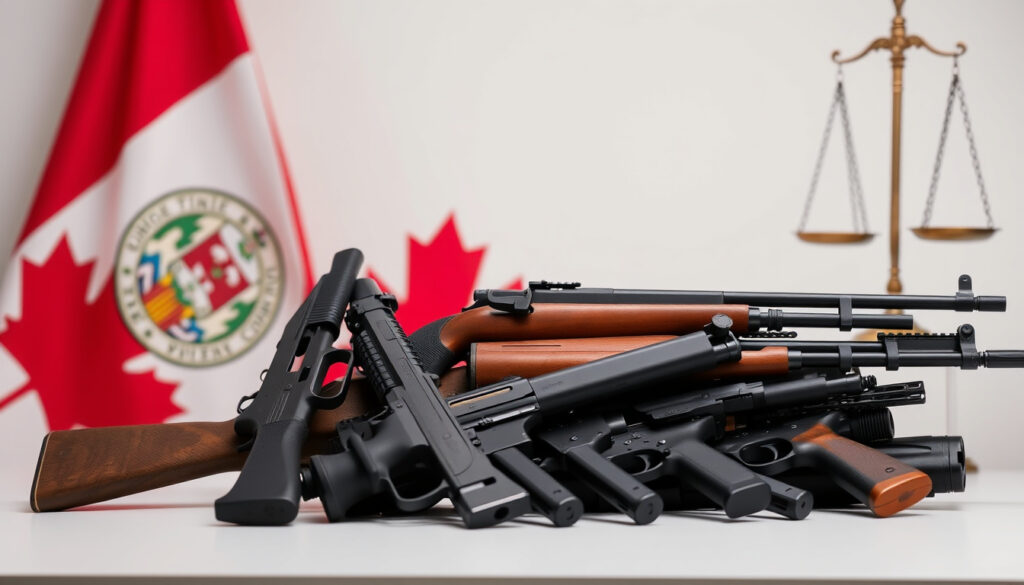
Canada Gun Buyback Program 2026: What You Need to Know
If you own a firearm that was banned under Canada’s 2020 order, you are likely facing a deadline and a set of choices that come with real consequences. The Assault-Style Firearms Compensation Program is Canada’s attempt to remove thousands of prohibited weapons from private hands, and this guide walks through who can still take part, how compensation works, and what happens if you do nothing.
Official program name: Assault-Style Firearms Compensation Program ·
Initial implementation location: Cape Breton Island ·
Eligible participants: Businesses and individuals owning prohibited assault-style firearms
Quick snapshot
- The federal program is called the Assault-Style Firearms Compensation Program and is operational (Government of Canada (Public Safety)).
- Phase 1 of the buyback took place on Cape Breton Island (BBC News).
- Compensation is offered to eligible businesses and individuals who surrender prohibited firearms (Government of Canada (individual declaration page)).
- The amnesty period ends on October 30, 2026 (Government of Canada (Public Safety)).
- Effectiveness of the program in reducing gun violence
- Future of the handgun freeze after 2026
- Total number of firearms surrendered so far
- Long-term political and legal challenges
- Collection, deactivation, and compensation processes expected spring through early fall 2026 (Government of Canada)
- Amnesty expires October 30, 2026 — risk of criminal liability after that date (Government of Canada)
- Possible updates to the prohibited firearms list (Government of Canada)
The program’s critical dates and details are consolidated in the table below.
| Key fact | Value |
|---|---|
| Official Program Name | Assault-Style Firearms Compensation Program |
| Initial Phase Location | Cape Breton Island |
| Recent Report Date | April 3, 2026 (BBC) |
| Program Status | Ongoing |
| Individual Declaration Deadline | March 31, 2026 (according to BC Firearms Academy) |
| Business Portal Reopened | April 23, 2026 (Government of Canada) |
| Amnesty End Date | October 30, 2026 (Government of Canada) |
| Banned Models & Variants | Over 2,500 makes and models since May 2020 (Government of Canada); earlier consultation cited over 1,500 (Public Safety Canada (consultation page)) |
| Compensation Basis | Predetermined price list per model (Public Safety Canada) |
| Eligible Participants | Businesses and individual firearm owners |
What can I do with unwanted guns in Canada?
Options for surrendering firearms
- Submit a declaration through the official ASFCP portal (deadline for individuals has passed; exceptions apply for military and law enforcement members deployed abroad — Government of Canada (individual page)).
- Wait for notification from the program, then sign a Funding Agreement before deactivating or turning in the firearm — Government of Canada. Failing to follow this sequence may make you ineligible for compensation.
- Businesses can submit declarations through the reopened portal as of April 23, 2026 (Government of Canada).
The catch: individuals who missed the March 31, 2026 deadline face a narrow window — only those who opened a contact centre case before the deadline, paper applications postmarked by April 15, or deployed CAF/RCMP members can still declare (Government of Canada).
The buyback program vs. amnesty
The buyback is a voluntary compensation program; the amnesty provides temporary legal protection for possession of prohibited firearms. The amnesty ends October 30, 2026 (Government of Canada). After that date, keeping a prohibited firearm without a proper license or exemption becomes a criminal offence. “Violent crime involving firearms is a threat to public safety. See the actions the Government of Canada is taking and how you can help end gun violence,” the government states on its official page.
Selling or transferring prohibited firearms
Transfer or sale of prohibited assault-style firearms is restricted. The government stresses that “compliance with the law is not voluntary” (Government of Canada). If you own a prohibited model, your options are to surrender it through the buyback or deactivate it by an approved business and then potentially sell it. The program is voluntary, but the underlying prohibition on possession after the amnesty expires is not.
Owners who submit a declaration and wait for the Funding Agreement can receive compensation based on a set price list, but any attempt to deactivate or sell the firearm before government approval voids eligibility. Speed is not on the owner’s side.
The implication: owners must weigh the risk of doing nothing against the bureaucratic wait for compensation.
Is the AK-47 banned in Canada?
Legal status of AK-47 variants
Yes, the AK-47 and its variants are classified as prohibited firearms in Canada under the 2020 Order in Council that banned over 2,500 makes and models of assault-style firearms (Government of Canada). Any firearm that meets the definition of a prohibited assault-style weapon — including the AK-47, its clones, and similar rifles — is subject to the buyback program.
List of prohibited assault-style firearms
The government maintains a regularly updated list of prohibited models. An earlier Public Safety Canada consultation page indicated over 1,500 models and variants were initially covered, but the count has since grown (Public Safety Canada). Owners should check the current official list on the ASFCP portal to confirm if their firearm is included.
Penalties for possession
Possessing a prohibited firearm without an exemption after the amnesty expires on October 30, 2026 can lead to criminal charges, including illegal possession of a restricted or prohibited firearm, which carries penalties up to 10 years in prison (Government of Canada (Criminal Code)). The government warns that keeping affected firearms after that date “may create criminal liability.”
The pattern: Canada is taking a phased approach — first a ban, then a compensation program, then compulsory surrender once the amnesty ends. The buyback is the carrot; the Criminal Code is the stick.
Can you still buy handguns in Canada in 2026?
Current handgun freeze regulations
Yes, handgun sales remain frozen under the national freeze that took effect in October 2022. As of 2026, the freeze is still in place and there is no indication from the government that it will be lifted (Government of Canada). The freeze prohibits the transfer, sale, or import of handguns, with very narrow exceptions for target shooters and certain professionals.
Handgun sales and transfers
The freeze applies to all handgun sales between individuals and businesses. Only individuals with an Authorization to Transport (ATT) for target shooting and approved transfers from licensed businesses can still acquire a handgun in limited circumstances (RCMP (federal police force)).
Future of handgun legality
The government has not announced any plan to legalize handgun sales. The buyback program currently focuses on assault-style rifles, not handguns. However, the handgun freeze is separate legislation and remains in effect indefinitely. “Violent crime involving firearms is a threat to public safety,” the government reiterates, implying no immediate rollback.
The catch: even sport shooters face a paperwork-heavy process that many find prohibitive.
What is the Canada gun buyback list?
Official list of prohibited firearms
The government publishes a searchable list through the ASFCP portal. It includes specific makes and models — not generic categories. For example, the list names the AR-15, Ruger Mini-14, and certain M14 variants (Government of Canada). The list has been updated multiple times since May 2020.
How to check if your firearm is on the list
You can check the official list on the ASFCP portal by searching your firearm’s make and model. The government encourages owners to verify before submitting a declaration. If you’re unsure, contact the ASFCP contact centre (Government of Canada (contact page)).
Updates to the buyback list
The list is periodically updated. In 2025, additional models were added. The government does not provide a fixed schedule for updates, so owners should check periodically. The April 3, 2026 BBC report noted that the program’s early phase on Cape Breton Island had limited participation, raising questions about the list’s completeness (BBC News).
How does the Canada gun buyback compensation work?
Compensation amounts and price list
Compensation is based on a predetermined price list that the government developed after consultation with industry, law enforcement, and the public (Public Safety Canada). The proposed price list included amounts per model and caliber, with higher compensation for rarer or more expensive firearms. Exact figures are not published in a single table; the government calculates on a case-by-case basis after declaration.
Eligibility for compensation
Both businesses and individuals who legally owned a prohibited firearm before the ban can apply. The program offers compensation “subject to availability of program funds” (Government of Canada).
Submission process for compensation
- Step 1: Verify your firearm is on the prohibited list.
- Step 2: Submit a declaration through the ASFCP portal (individuals: deadline passed; businesses: open).
- Step 3: Wait for the government to assess your declaration and send a Funding Agreement.
- Step 4: Sign the agreement, then either deactivate the firearm or arrange for collection.
- Step 5: Receive compensation after deactivation or surrender is confirmed.
“Once a declaration is assessed, the claimant receives a message in the ASFCP web portal or by phone and mail for paper declarations,” the government explains (Government of Canada).
The National Firearms Association, a Canadian firearms advocacy group, criticized the program’s initial phase, stating “it was not a success” (NFA.ca (firearms advocacy group)). The BBC report from April 3, 2026 noted that participation in the Cape Breton pilot was low, though the government defends the program as a necessary step in public safety.
The implication: even with compensation, the program’s uptake remains a key question mark.
Steps to surrender your firearm and claim compensation
Missing a single step — like deactivating a firearm before receiving the Funding Agreement — can cost you the compensation entirely. The process is not forgiving.
- Check the list – Confirm your firearm is prohibited on the official ASFCP list.
- Submit a declaration – Use the portal at canada.ca/firearms-buyback. For individuals, the deadline has passed (exceptions apply). Businesses can still declare.
- Wait for assessment – The government reviews your declaration and sends a Funding Agreement via the portal or mail.
- Sign the agreement – Do not deactivate or hand over the firearm before signing. Doing so makes you ineligible for compensation.
- Deactivate or arrange collection – You can deactivate the firearm at an approved business or wait for government pickup.
- Receive compensation – Payment is processed after the firearm is deactivated or collected.
In Saskatchewan and Alberta, the government advises participants to consult their provincial government for additional laws that may affect participation (Government of Canada).
Timeline of the Canada gun buyback program
- – Order in Council bans over 1,500 models of assault-style firearms.
- – Assault-Style Firearms Compensation Program announced (Government of Canada).
- – Phase 1 implemented on Cape Breton Island (BBC News).
- – Individual declaration deadline (per BC Firearms Academy).
- – BBC publishes in-depth report on program progress and challenges.
- – Business portal reopens (Government of Canada).
- – Amnesty period ends.
The pattern: each milestone tightens the window for legal participation.
Clarity check: what we know and what remains uncertain
Confirmed
- The Assault-Style Firearms Compensation Program exists and is operational (Government of Canada).
- Phase 1 took place on Cape Breton Island (BBC News).
- Compensation is offered to eligible businesses and individuals.
- The program covers a list of prohibited assault-style firearms.
Unclear
- Effectiveness of the program in reducing gun violence.
- Future of the handgun freeze after 2026.
- Total number of firearms surrendered so far.
- Long-term political and legal challenges.
The implication: while the program’s design is clear, its impact remains unproven.
Expert perspectives
The government’s buyback program was not a success in its initial phase. Participation was low and the process was confusing for owners.
National Firearms Association (Canadian firearms advocacy group)
Violent crime involving firearms is a threat to public safety. See the actions the Government of Canada is taking and how you can help end gun violence.
Government of Canada (Public Safety)
Summary: The choice facing Canadian gun owners
The Canada gun buyback program is a central piece of the country’s firearm policy, but its success depends entirely on participation. Early signs from Cape Breton Island suggest modest uptake, and the government faces the challenge of enforcing compliance after the amnesty expires. For businesses and individuals with prohibited firearms, the decision is clear: participate in the compensation program before the amnesty ends, or risk criminal liability. For Canadian gun owners, the choice is between surrendering a firearm with compensation or holding onto a weapon that becomes illegal.
Frequently asked questions
Who is eligible for the buyback?
Businesses and individuals who legally owned a prohibited assault-style firearm before the ban. The program is open to both groups, but individual declarations closed on March 31, 2026 with limited exceptions.
What happens if I do not surrender my prohibited firearm?
After the amnesty ends on October 30, 2026, possession of a prohibited firearm without a valid exemption becomes a criminal offence, carrying potential imprisonment and a criminal record.
Can I sell my firearm instead of surrendering it?
Restricted. Prohibited assault-style firearms cannot be sold or transferred to another individual. The only legal options are surrender through the buyback or deactivation by an approved business.
Are there any fees for participating in the buyback?
No fee to submit a declaration. The government covers the cost of deactivation or collection. Participants do not pay to participate.
How long will the buyback program run?
The compensation program is ongoing, but the amnesty period — during which possession is temporarily legal — ends October 30, 2026. Collection and compensation processing are expected through early fall 2026.
Will the buyback affect my firearms license?
Participation in the buyback does not affect your Possession and Acquisition License (PAL). However, if you are found in possession of a prohibited firearm after the amnesty, your license could be revoked.
What is the difference between buyback and amnesty?
The buyback is a voluntary compensation program. The amnesty is a temporary legal protection that shields owners from prosecution for possessing a prohibited firearm while they decide what to do. The amnesty ends October 30, 2026.
How do I log in to the Canada gun buyback portal?
Visit Canada.ca/firearms-buyback and use your GCKey or Sign-In Partner account to access the ASFCP portal.
More related posts
 Paying Off Your Mortgage Game Changer: Pros, Cons & Steps
 30 oz to ml: Exact Conversion and Common Questions
 Lane Hutson Bio, Contract, and Brother Comparison
 Samsung Galaxy M42 5G 2025: Should You Still Buy It
 Outlander Season 7 Part 2 – Episode Guide and Release Dates
 Lac La Biche Weather: Forecast, Climate & Averages
 Jake Knapp: PGA Tour Win and Girlfriend’s Death in 2024
 Timberwolves vs Oklahoma City Thunder: Score, Odds, Game 2 Preview